Seven Samurai: Kurosawa’s Blueprint for the Modern Epic
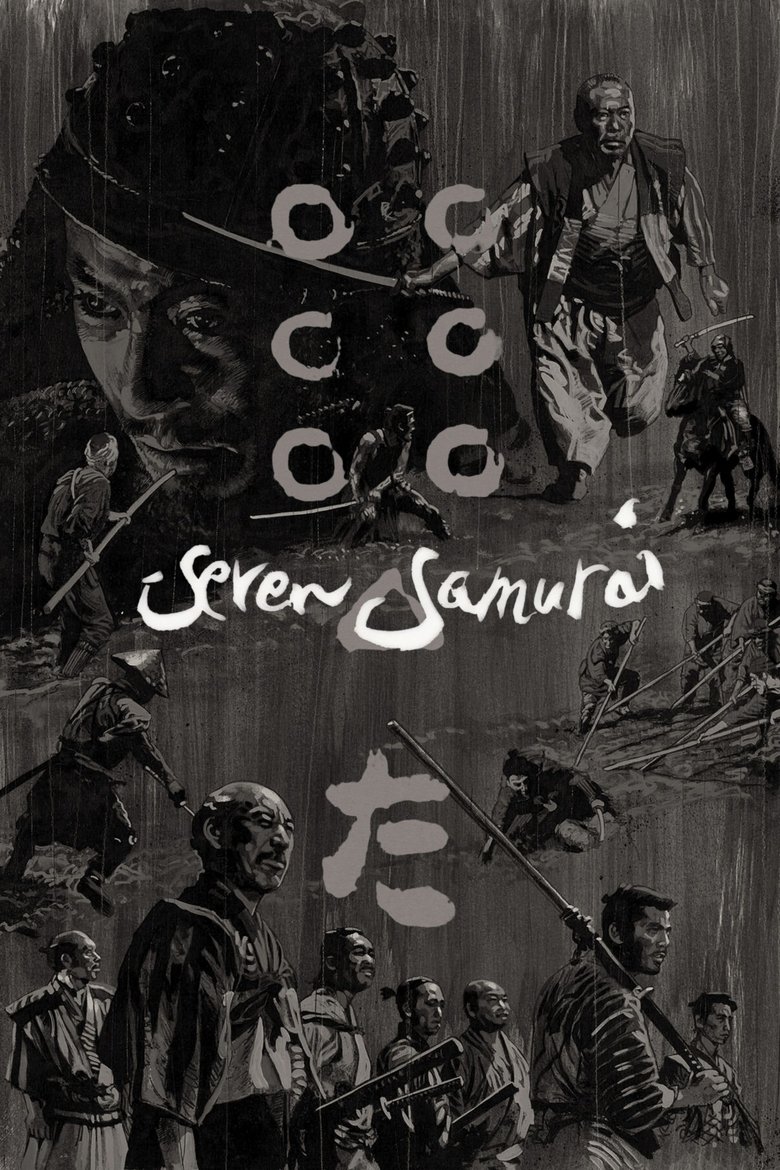
Seven Samurai is Akira Kurosawa’s 1954 epic, a three-and-a-half-hour Japanese production that permanently reshaped the grammar of the modern action film. Known in Japan as Shichinin no Samurai (七人の侍), it follows a starving village that hires masterless warriors to defend its harvest against bandits. More than seventy years on, it remains the structural template behind countless ensemble adventures. Few films reward patient, repeat viewing as generously, and fewer still feel this urgent across a runtime of three and a half hours. What endures is not the spectacle alone but the moral weight Kurosawa places beneath every sword stroke.
Credits
| Original Title |
七人の侍 (Shichinin no Samurai) |
| Director |
Akira Kurosawa |
| Screenplay |
Akira Kurosawa, Shinobu Hashimoto, Hideo Oguni |
| Starring |
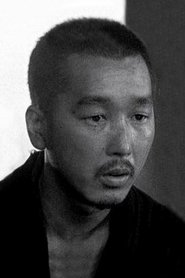
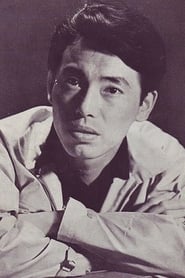
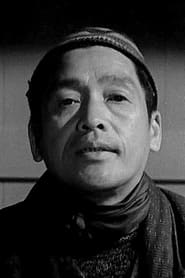
Toshirō Mifune, Takashi Shimura, Yoshio Inaba, Seiji Miyaguchi, Isao Kimura |
| Genre |
Action, Drama |
| Year |
1954 |
| Runtime |
3h 27m |
| Country |
Japan |
| IMDB Rating |
8.5 / 10 (4187 votes) |
| Streaming |
HBO Max, Criterion Channel |
The Cinematic Language of Seven Samurai
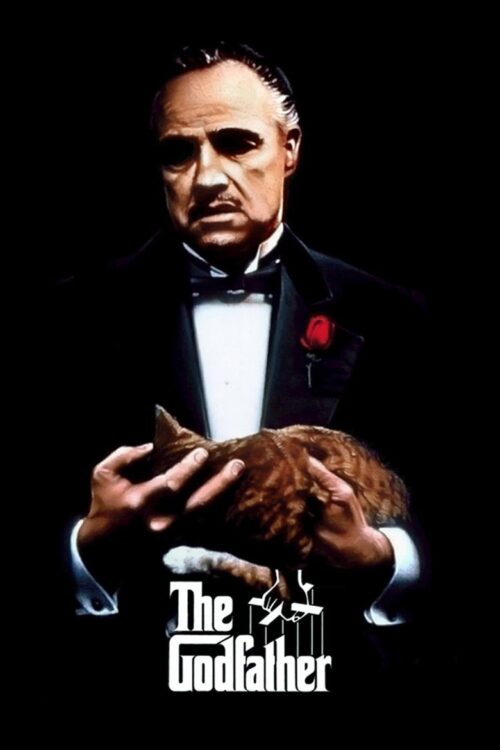
The technical achievement of Seven Samurai is so foundational that its innovations now read as the default vocabulary of action cinema. Kurosawa shot with multiple cameras running simultaneously, often fitted with telephoto lenses, allowing performers to move freely while the director assembled coverage from compressed, layered angles. The result is a battlefield that feels chaotic yet remains legible: the viewer always knows where each fighter stands and what he wants. Kurosawa cuts on motion with a precision that borders on the musical, and his celebrated axial edits, jumping the camera straight along a single line toward a subject, give scenes a percussive forward thrust. Weather is never decorative. The climactic defense unfolds in torrential rain, the ground churned to mud that drags at every body, and the downpour becomes a physical antagonist as real as the bandits. Fumio Hayasaka’s score works by restraint, withholding music until rhythm and silence have done their work. Kurosawa frames his ensemble with painterly attention to depth, staging figures across foreground and background so that a single composition carries several simultaneous lines of action. The wipe transitions, used here with unusual confidence, push the narrative forward like turning pages. This is filmmaking that treats the camera as an instrument of meaning rather than mere recording, and its influence is total. The deliberate, architecturally composed crime epics that followed, among them Francis Ford Coppola’s The Godfather, inherited Kurosawa’s conviction that scale and intimacy belong in the same frame. Kurosawa also insisted on a coherent spatial logic for the village itself, mapping its bridges, fences, flooded fields, and weak northern approach so precisely that the defensive plan becomes something the audience can follow like a tactician. When the bandits finally breach the perimeter, that geography pays off, and every loss registers as a specific failure of a specific position. Few films have given so much technical grammar to the medium and still felt this alive.
Seven Faces, Seven Philosophies
What keeps Seven Samurai from collapsing under its runtime is the clarity with which Kurosawa and his co-writers individuate the warriors. Takashi Shimura’s Kambei is the still center, a veteran whose authority comes from calm rather than force; the film introduces him through an act of selfless cunning, and that single scene establishes a leader worth following. Toshirō Mifune’s Kikuchiyo is the volcanic counterweight, a farmer’s son masquerading as a samurai, by turns clownish, furious, and unbearably moving. Mifune plays him at maximum intensity, but the performance is calibrated, not indulgent: Kikuchiyo is the bridge between two classes that the film insists cannot otherwise touch. Seiji Miyaguchi’s Kyuzo embodies a different ideal entirely, the master swordsman whose economy of motion makes violence look like meditation. Isao Kimura’s Katsushiro carries the film’s youth and its romanticism, an apprentice learning that the warrior’s life is closer to grief than glory. Daisuke Katō’s Shichiroji, Kambei’s old comrade-in-arms, supplies an easy fellowship that the script never bothers to over-explain, the shorthand of two men who have already survived a war together. Minoru Chiaki’s Heihachi serves as the group’s quiet morale, the cheerful pragmatist who jokes that his swordsmanship is mediocre but his spirit dependable. Yoshio Inaba’s Gorobei, recruited for his judgement as much as his blade, becomes Kambei’s trusted second. Kurosawa gives each man a defining gesture rather than a speech, and that economy is the craft. Around them, the farmers are written without sentimentality, capable of cowardice, deceit, and a desperate, understandable self-interest. Kurosawa refuses to flatten anyone into a type. Each samurai answers the question of why a man would risk death for strangers differently, and the film treats those answers as a genuine moral inquiry. The psychological interiority here is remarkable for an action picture of its era, and it is the reason the casualties land with real weight rather than as plot mechanics.
Critical Note: The Template That Conquered Cinema
Seven Samurai did not merely succeed; it became an industry blueprint. The structure Kurosawa engineered, recruiting a team of specialists, preparing a defense, and executing it under pressure, was abstracted into a reusable narrative engine that Hollywood and world cinema have drawn on ever since. The Western remake arrived in 1960, but the deeper inheritance runs through heist films, war pictures, and ensemble adventures of every kind. The recruitment montage, the reluctant veteran, the mismatched specialists bonding under threat: these are now genre furniture, and almost all of it traces to this single film. The exchange ran in both directions. Kurosawa himself drew openly on the Hollywood Western and the frontier mythology of directors like John Ford, so the influence is best understood as a genuine dialogue across national cinemas rather than a one-way export. Studying Seven Samurai is, in effect, studying the source code of the modern commercial blockbuster, which makes its enduring artistic ambition all the more instructive.
The Ending and the Price of Victory
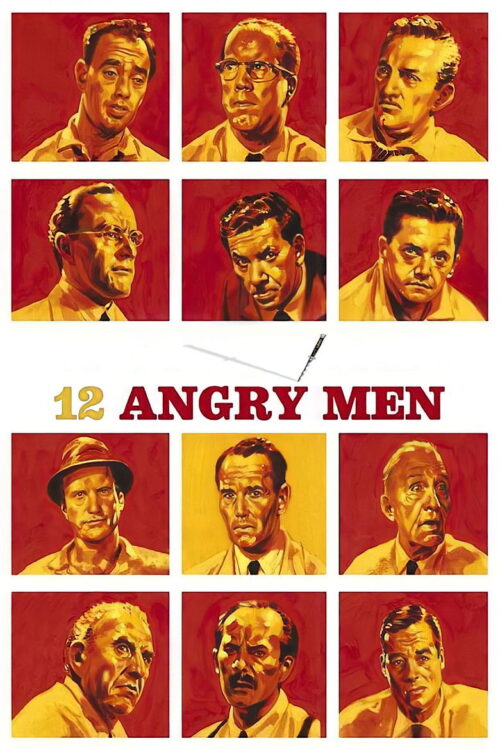
Kurosawa builds Seven Samurai in three movements, recruitment, fortification, and battle, and withholds full-scale combat for an extraordinarily long time. That patience is the point: by the time the bandits attack in force, the audience has lived inside the village long enough to understand exactly what is at stake. The final battle, fought in the mud and rain, kills four of the seven. Heihachi falls early in the skirmishes; Gorobei, Kyuzo, and finally Kikuchiyo die in the closing assault, the latter cutting down the last bandit even as he himself is shot. Kurosawa stages these deaths without glory. There is no triumphant music, only rain and exhaustion. The film’s meaning crystallizes in its closing scene. The surviving samurai watch the farmers, already returned to planting their rice, singing as they work. Kambei turns to Shichiroji and delivers the picture’s verdict: the victory belongs to the peasants, not to the warriors. The four grave mounds on the hill, swords planted upright as markers, frame the survivors as men who have once again won a battle and lost their purpose. This is the film’s hard sociological core. The samurai class, romanticized for centuries, is shown as historically obsolete, a caste of fighting men with no place in the agricultural society they bleed to protect. The aborted romance between Katsushiro and the farmer’s daughter Shino confirms the divide: the two worlds cannot merge. The film also refuses the consolation of a clean moral ledger. The villagers who beg for protection are the same villagers who once hunted defeated samurai for their armor, a fact Kikuchiyo hurls at the group in the film’s most blistering monologue. Kurosawa lets that accusation stand unresolved, implicating every class in the cycle of rural violence. For viewers drawn to its mode of confined, ensemble-driven moral drama, 12 Angry Men offers a comparable study of individuals tested by collective pressure, while The Shawshank Redemption shares its long, patient faith in human endurance. Kurosawa ends not on the spectacle of combat but on the quiet, devastating recognition that those who fight history rarely inherit it.
Frequently Asked Questions
Where can you watch Seven Samurai online?
As of 2026, Seven Samurai streams on HBO Max and the Criterion Channel, and is available to rent or buy digitally through major platforms. The Criterion Collection edition is the standard reference release, offering the fully restored 207-minute cut with subtitles.
What is Seven Samurai about?
Set in 16th-century Japan, the film follows a poor farming village that hires seven masterless samurai to defend it against a band of marauders who plan to steal its harvest. The plot is simple; its power lies in the moral and class tensions Kurosawa draws from that premise. Its three-act design of recruitment, preparation, and siege has been studied by screenwriters for decades as a model of escalating structure.
Who stars in Seven Samurai?
The film stars Takashi Shimura as the veteran leader Kambei and Toshirō Mifune as the volatile Kikuchiyo, with Seiji Miyaguchi, Yoshio Inaba, Minoru Chiaki, Daisuke Katō, and Isao Kimura completing the ensemble. Mifune and Shimura were Kurosawa’s most frequent collaborators, and their long partnership with the director helped define postwar Japanese cinema.
What films are similar to Seven Samurai?
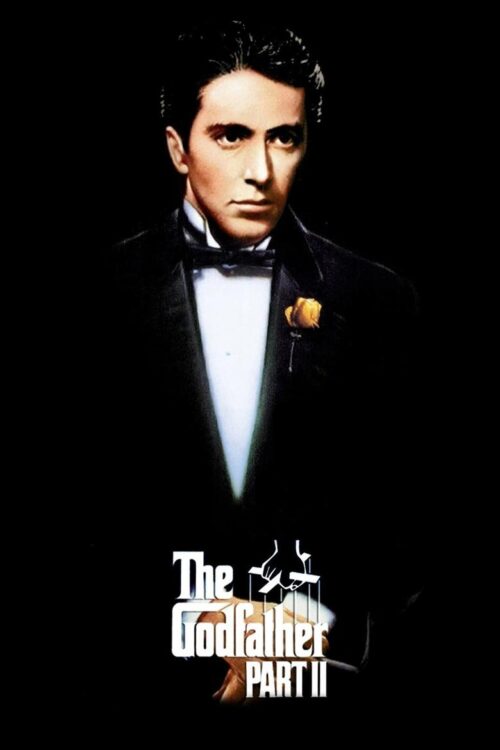
Admirers of its epic ensemble storytelling should explore The Godfather Part II for comparable narrative scale, or browse other landmark drama titles in the GetMovie catalogue for films that match its moral depth.